
I’m always on the lookout for excellent examples of narrative story structure.
By: Grant P. Ferguson
Last Updated: February 12, 2025
My quest to find the science fiction stories that inspired my reading as a youth had me scouring the used book markets. That’s where I found Famous Science-Fiction Stories: Adventures in Time and Space. The yellowed, 1,000 page book displayed the copyright 1946, 1957 by Random House, Inc.
Imagine my surprise to find an over-the-top example of narrative story structure in a book of anthologies.
Wrong Book but Right Narrative Story Structure
Although the used book I purchased was not the catalyst for my lifelong reading habit, it contained this introduction that sang the praises of editor John W. Campbell.
“And perhaps no one man ever had a greater influence over the literary form, for Campbell single-handedly revolutionized the writing of and—possibly more important—the thinking in modern science fiction.”
The introduction conveyed the opinion that Campbell created for readers, writers, and editors the Golden Age of twentieth-century imaginative literature.
Who Is John W. Campbell?
If you love science fiction, especially short stories, you may know John W. Campbell as the editor of Astounding Stories.
In that role, Campbell used his criteria for first-rate fiction by requiring authors to adhere to his narrative story structure. He perfected that framework while writing under the pseudonym of Don A. Stuart. For example, he wrote Who Goes There? (1938).
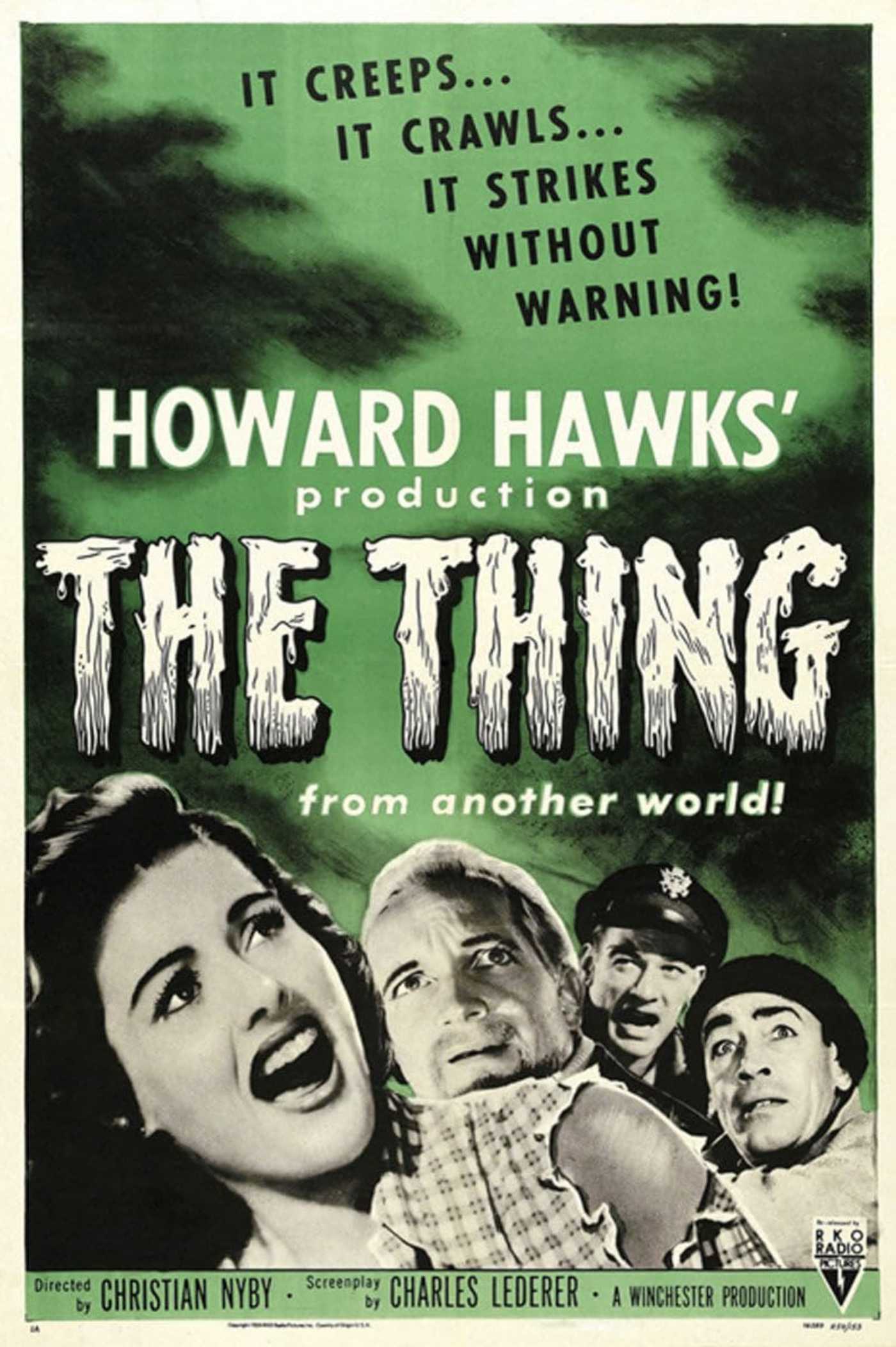
As a fan of 50s science fiction movies, I discovered that The Thing from Another World (1957), rated 7.1/10 on imdb.com, was based on Who Goes There?
Narrative Story Structure Tips
When authors produced science fiction without a framework, Campbell noted atrocious prose, emphasizing outlandish science that delivered graceless and dull fiction.
His solution seems simple, but it literally saved Astounding Stories. Campbell engaged readers at a level never seen before by demanding stories with an equal emphasis on:
- Logical science readers could understand, and
- Literate, entertaining fiction.
“As far as ‘Campbell’s law’ is concerned, a clumsy sentence or weak characterization is just as taboo as confusing a planet with a star.” He didn’t just preach the structure, Campbell showed authors how to engage readers with practical tips.
For example:
- Readers come for their preferred genre, and in this case, science fiction, and authors can apply the audience’s expectations their stories (e.g., romance, mystery, fantasy, etc.).
- They want entertainment, not confusion, so the story’s premise and science must make sense.
- The audience expects fully developed characters who to react in ways that satisfy readers’ craving for emotions, and that means authors must provide relatable casts capable of realistic behaviors.
- The plot may include other-world settings, but the events must force the characters to react while conveying a sense of realism.
- Readers love the subtle themes that offer insights, regardless of whether the story occurs in the past, present, or future (and with science fiction, that might include all three).
- Without a doubt, authors who could write scenes that captured and held the audience’s attention rose in the ranks. For instance, here are a few of the authors known to generations of readers.
- Robert A. Heinlein
- Don A. Stuart (aka John W. Campbell)
- Lester Del Rey
- A. E. Van Vogt
- Isaac Asimov
These essential storytelling tips are as valid today as when John W. Campbell reigned during the Golden Age of twentieth-century imaginative literature.
Leave a Reply
Over the years, which writing tips helped you most?
14 responses to “Narrative Story Structure Tips for Engaging Readers”
Sounds like an interesting read! There’s a special place in my heart for old, yellowed books, slightly musty and bedraggled, but still full of character. They bring so much nostalgia. And, as your discovery proves, there’s almost always an exciting lesson or secret trapped within their pages!
Well said, Damyanti. I’m pleased to see the sound writing principle offer a firm foundation for writers of all ages. Thanks sharing your thoughts!
Well reviewed. Looking interesting book. Good 👍
Thanks for adding to the discussion, Priti.
🙏
Essential story-telling tips for sure. Thank you for sharing, Grant!
…and thanks for stopping by, Wynne!
Good sound, solid advice. 🙂
Thanks for stopping by, Laura, and I appreciate the boost!
The hubster is a classic science fiction fan. We’ve buddy-read Heinlein, Asimov, and van Vogt. (They are so cheesy, but the plots are great.) I had no idea Don Stuart was John Campbell!
I was the under-tall 6th grader reaching up for the sci-fi book in the school’s cafetorium. Like you, the link between Stuart escaped my attention until I read the short story and realized it was like the movie. The real lesson for writers: we plant the seeds but we don’t get to govern when they grow. The short story was written in 1938 but the film didn’t come out until the 50s. I wonder how many writers plow, plant, and nurture the seeds, but then walk away from their field before the harvest comes in? You are appreciated, Priscilla. Have a great week!
Interesting analysis, Grant.
The movie scared (scarred?) me as a child, and I still get a kick out of watching the original black-and-white film. Thanks for stopping by today!
Great backstory, thanks for sharing Grant!