
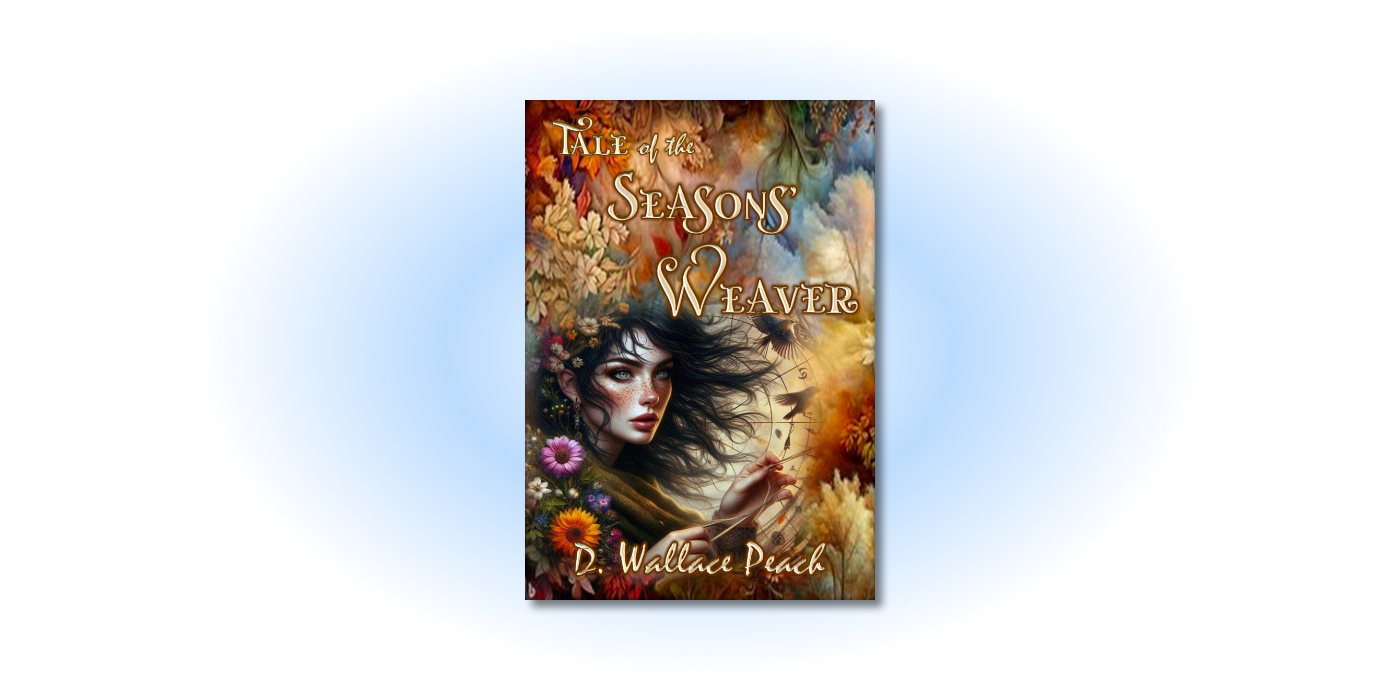
When I read D. Wallace Peach’s latest novel, Tale of the Season’s Weaver, I explored a fantasy world like no other. Her storytelling flair had me thinking she does for fantasy novels what Raymond Chandler did for hard-boiled detective classics.
By: Grant P. Ferguson
Last Updated: August 6, 2025
An Award-winning Author
Diana Peach currently lists 23 titles on Amazon, focusing decidedly on fantasy, and her latest novel won the grand prize for the Next Generation Indie Book Awards for 2025.
However, she also writes in other genres, including a few anthologies and collaborations. In this article, I’ll focus on the way Diana engages readers with intricate imagery and descriptions that make her story world come to life.
If you’re unfamiliar with Diana’s work, I invite you to visit her website listed in the bio.
Prose Like Poetry
On Amazon, the review section summary for Tale of the Season’s Weaver referred to the author’s wise imagination and beautiful lyrical language.
I agree, and marveled at how Diana avoided the dreaded purple prose with delightful similes and metaphors. Throughout the tale, she used just the right words, giving readers a clear picture of the story world’s creative magic, unique characters, charmed creatures, and palpable evil.
First Excerpt
[GPF: Here is an excerpt that sets up the book’s major conflict between humans and the charmed.]
“Wolves.” Lothar rose into a crouch. A soundless prayer that they were mere animals slid from his chapped lips as he slowly pivoted to take up his bow. His gaze snapped to the stream’s pool where a toad-skinned face watched him with bulbous, blinking eyes. Slick green hair floated like spilled oil, and the monster beckoned with a reedy finger, her seductive smile rimmed with razor teeth.
“A lochalai.” His heart drummed in his ears. Numbing fingers, thick and clumsy, fumbled with his bow. “The charmed know we are here. We must leave this place.”
Second Excerpt
[GPF: Later, it becomes clear what caused the deep rift, ultimately throwing the chief protagonist into a fight for her life.]
Something stirred beside him—the tremble of an arrow’s fletching. Beneath it, the wolf he’d shot shuddered. The animal convulsed and slowly began to shift until what lay before him was no beast at all, but a pale being—long of limb, sharp-boned, and sylvan-eyed. One of the charmed shifters, her life slipping away with her blood. Her breath came in ragged gasps, each more labored than the last until her transformation stalled.
“Weregield.” The horrifying confirmation left Lothar’s lips in a frozen cloud, and he stared at the stricken men. Their folly had ended with the death of the Winter King’s own. “We need to escape this place. Now.”
Creating a Story that Resonates with Readers
There are multiple battles in the story, and the author links one scene to the next with skilled narrative drive, encouraging readers to continue the page-turning adventure.
Similar to the way J. R. R. Tolkien and C. S. Lewis used fantasy to convey important themes, D. Wallace Peach has readers caring about the chief protagonist, Erith, the child of a charmed mother and a human father. The halfling, Erith, lives on the border of mortal and enchanted worlds and belongs to neither. Thus, the story’s heroine faced the dilemma of wanting one thing but needing to learn a different lesson before she could solve the story’s dramatic problem.
For anyone forced to choose between fulfilling a heartfelt want and heeding a vocational call, he or she can relate to Erith’s dilemma.
A Highly Recommended Read
If you love fantasy, you’ll want to get your copy of Diana’s book.
For writers who may prefer other genres, you’ll want to read the Tale of the Season’s Weaver to see how the author applies the techniques and devices of bestselling authors. For example, you’ll notice before the end of a scene, she frequently places an open question into readers’ minds. Then, like a mystery, the audience searches for the answers, turning page after page while enjoying her entertaining story.
I recommend you visit Amazon and get your copy of Tale of the Season’s Weaver.
D. Wallace Peach Bio

A longtime reader, best-selling author D. Wallace Peach started writing later in life when years of working in business surrendered to a full-time indulgence in the imaginative world of books. She was instantly hooked.
Besides fantasy books, Peach’s publishing career includes participation in various anthologies featuring short stories, flash fiction, and poetry. She’s an avid supporter of the arts in her local community, organizing and publishing annual anthologies of Oregon prose, poetry, and photography.
Peach lives in a log cabin amongst the tall evergreens and emerald moss of Oregon’s rainforest with her husband, two owls, a horde of bats, and the occasional family of coyotes.
For book descriptions, excerpts, maps, and behind-the-scenes info, please visit https://dwallacepeachbooks.com.
A Note from D. Wallace Peach
After a decade of exploring different story structures, I wondered why no one had tried to combine them into one comprehensive storytelling system. Then I landed on the Trellis Method. It’s more than a way of structuring a plot—its pinch-points, pivots, and try-fail cycles. It’s a master system for writing a compelling and marketable book, from exploring genres and themes to developing rich characters to fleshing out the components of an engaging plot, including its subplots, scenes, and beats.
I was halfway through my WIP’s first draft when I was introduced to the Trellis Method, its inspiration, explanations, graphics, and worksheets. The material is exceptional, but I didn’t want to stop writing and lose my momentum. I’d completed my character bios, fantasy world-building, and outline already, and felt confident that they would hold up. Instead, I finished my draft and then evaluated the results against the Trellis Method after the fact.
Without a doubt, I found opportunities to improve my story, particularly by ramping up the conflict in the “face-off” confrontation just before the climax and by fleshing out subplots. I also focused attention on the “scene and sequel sequences,” ensuring that each scene’s main action was complemented by a character’s reaction that propelled the narrative forward.
Did the analysis pay off? Absolutely. The book went on to win gold in fantasy in an international competition in 2025. The Trellis Method is a Master Story Structuring system that I highly recommend.
Leave a Reply
What are your favorite genres and what have you discovered by reading outside your preference?


Leave a Reply to Grant at Tame Your BookCancel reply